Overview
A day ashore at Liverpool is enough for a loop of North Wales: out along the coast, through the mountains, and back by the Dee.
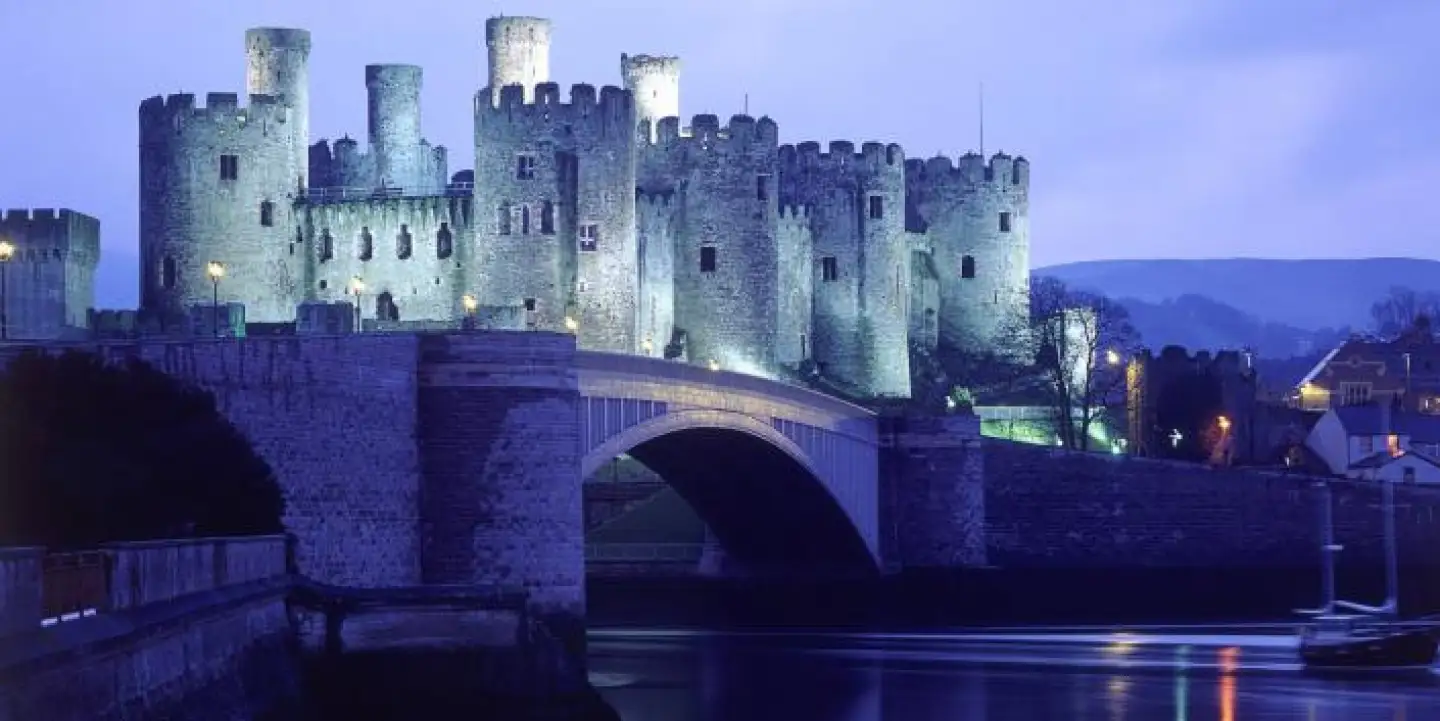
You stand at St Winefride's Well in Holywell, where pilgrims have come for 1,300 years, and walk into Conwy Castle, built for Edward I from 1283 and the best preserved of his Welsh castles. On the way back you pass the Racecourse in Wrexham, where Wales played its first home international in 1877.
Chester comes last, under an hour from your berth, so its walls and Rows can take whatever time the day has left.
This tour is an example: every trip is planned around the people taking it. How your tour comes together
- Duration
- 1 day
- Group size
- Up to 7 guests
- Vehicle
- Mercedes V-Class
Includes
- Expert bilingual local guide
- Travel in a Mercedes V-Class
- Fully customisable
Excludes
- Food and drink
- Entry fees to attractions
- Castles
- Mountains & lakes
- Heritage & culture
Itinerary
A loop of North Wales
West along the coast by Holywell to Conwy, where the town walls still run unbroken, then up the valley to Betws-y-Coed and Swallow Falls. Back east on Telford's road through Llangollen to the towpath over Pontcysyllte, then Wrexham, whose club Ryan Reynolds and Rob McElhenney now own, and Chester's medieval Rows.
-
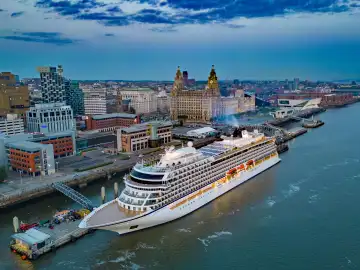
The cruise berth on the Mersey at Pier Head, where shore excursions collect
Liverpool's cruise terminal on the Mersey waterfront at Pier Head. Ships calling at Liverpool berth here, and private shore excursions collect passengers from the terminal and bring them back before all aboard. -
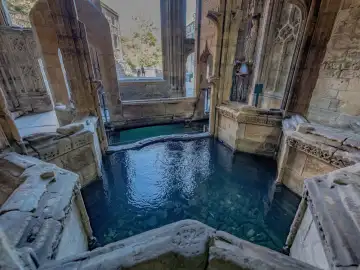
St Winefride’s Well, the Lourdes of Wales, a pilgrimage site for 1,300 years
Holywell is a historic town in Flintshire, North Wales, famous for St Winefride’s Well, one of the most important pilgrimage sites in Britain. The town has a rich history and is surrounded by beautiful countryside, making it a popular place for visitors interested in Welsh culture and heritage. Holywell is also close to the Dee Estuary and other attractions in North Wales. -
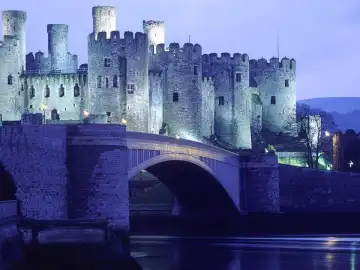
Edward I's exceptionally preserved fortress on the River Conwy
Built for Edward I by Master James of St George from 1283, on a rock at the mouth of the Conwy: eight towers, two barbicans and a great hall in one long ring, with no need for the concentric walls of his other castles because the rock did that work. It cost about £15,000, the most Edward spent so quickly on any Welsh castle, and it is the best preserved of them all. A World Heritage Site together with the town walls, which still run unbroken round the old town. -
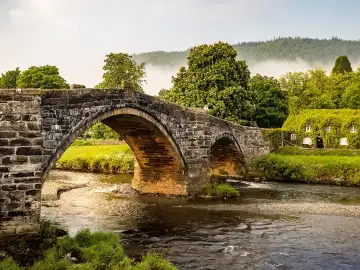
A Conwy Valley market town beside the 17th-century Pont Fawr
A small market town on the River Conwy. Pont Fawr, the three-arched bridge of 1636, is attributed by tradition to Inigo Jones, and Tŷ Hwnt i'r Bont beside it is a 15th-century house, now the ivy-covered tearoom in every photograph of the town. Gwydir Castle, the Wynn family's Tudor house, is across the river. -
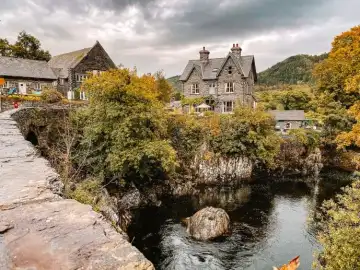
Victorian resort village of stone bridges and riverside woodland walks
A gem of a village and the gateway to Snowdonia, Betws-y-Coed has been a popular holiday destination since the Victorian era. Situated in a picturesque valley at the confluence of the River Conwy and River Llugwy, the village offers charming stone bridges, woodland walks, and a wonderful selection of outdoor shops and cafes. -
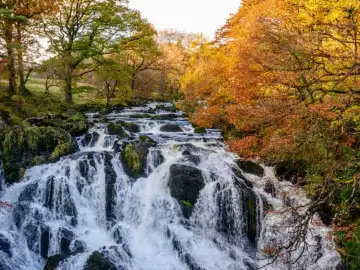
Snowdonia's most popular waterfall, a short way from Betws-y-Coed
A series of falls on the Afon Llugwy two miles above Betws-y-Coed, the most visited waterfall in Snowdonia since the Victorians came by train. The Welsh name, Rhaeadr Ewynnol, means the foaming fall; 'ewynnol' sounds like 'y wennol', the swallow, and the English name stuck. -
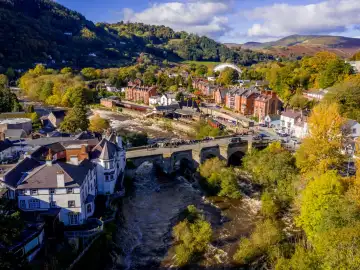
Dee Valley town below the Berwyn Mountains and Castell Dinas Bran
A small town at a crossing of the Dee, in the narrowest part of the valley below the Berwyn Mountains. The river runs fast here and canoeists fight through it under the old bridge, while a horse pulls the passenger boats along the canal above the town. Each July the International Musical Eisteddfod fills the Royal Pavilion with singers and dancers from around the world, and a heritage railway runs ten miles up the valley to Corwen. On the hill above are the ruins of Castell Dinas Brân. -
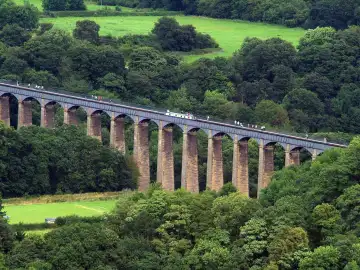
Telford's 1805 aqueduct, the highest navigable one in the world
Thomas Telford's aqueduct of 1805 carries the Llangollen Canal 307 metres across the Dee on 18 tapering stone piers, hollow at the top to save weight, 38 metres above the river: the highest navigable aqueduct in the world and a World Heritage Site. You can walk the towpath across, with a railing on one side and the drop on the other, or see it from the riverbank below. -

Home of Wrexham AFC, founded 1864 and now known the world over
The club was founded in 1864 and is one of the oldest football clubs in Wales. Wrexham FC has a long and storied history. Wrexham FC has a passionate fan base and a rich history, and the recent takeover from Ryan Reynolds and Rob McElhenney has brought renewed hope and optimism for the future of the club. -
The cruise berth on the Mersey at Pier Head, where shore excursions collect
Liverpool's cruise terminal on the Mersey waterfront at Pier Head. Ships calling at Liverpool berth here, and private shore excursions collect passengers from the terminal and bring them back before all aboard.
Frequently asked questions
- Can we change the itinerary?
Yes. Every tour we run is customised, so treat this itinerary as a starting point. Tell us what interests you and we will build the days around it.
- How many of us can come?
Up to 7 guests, travelling together in our Mercedes V-Class. Seven can be tight, so we usually recommend no more than 6. For a party of 8 or more, get in touch and we will make special arrangements.
- How far ahead should we get in touch?
Whenever suits you. Some guests write eight months ahead, some a few weeks before. It's best to confirm availability as soon as possible.
- Can children come?
Children are welcome. Not every tour suits every age, so tell us their ages when you get in touch and we will plan the day around them. We are not able to accommodate infants and babies.
- Are admission fees included?
No. Entry to castles, gardens and other attractions is paid on the day, where a fee applies. Most of the castles are maintained by Cadw, part of the Welsh Government. Please visit cadw.gov.wales. We can advise you on the best deals when you book your tour with us.
- Is food included?
No. As we tour we will suggest eating places that our guests have enjoyed.
- What should we wear and bring?
Sensible footwear for some light walking, and a rain jacket, just in case.
- How much walking is involved?
Some, and none of it strenuous: the walk from the car to a castle gate or a viewpoint. If walking is a concern, tell us and we will plan the stops accordingly.
