Overview
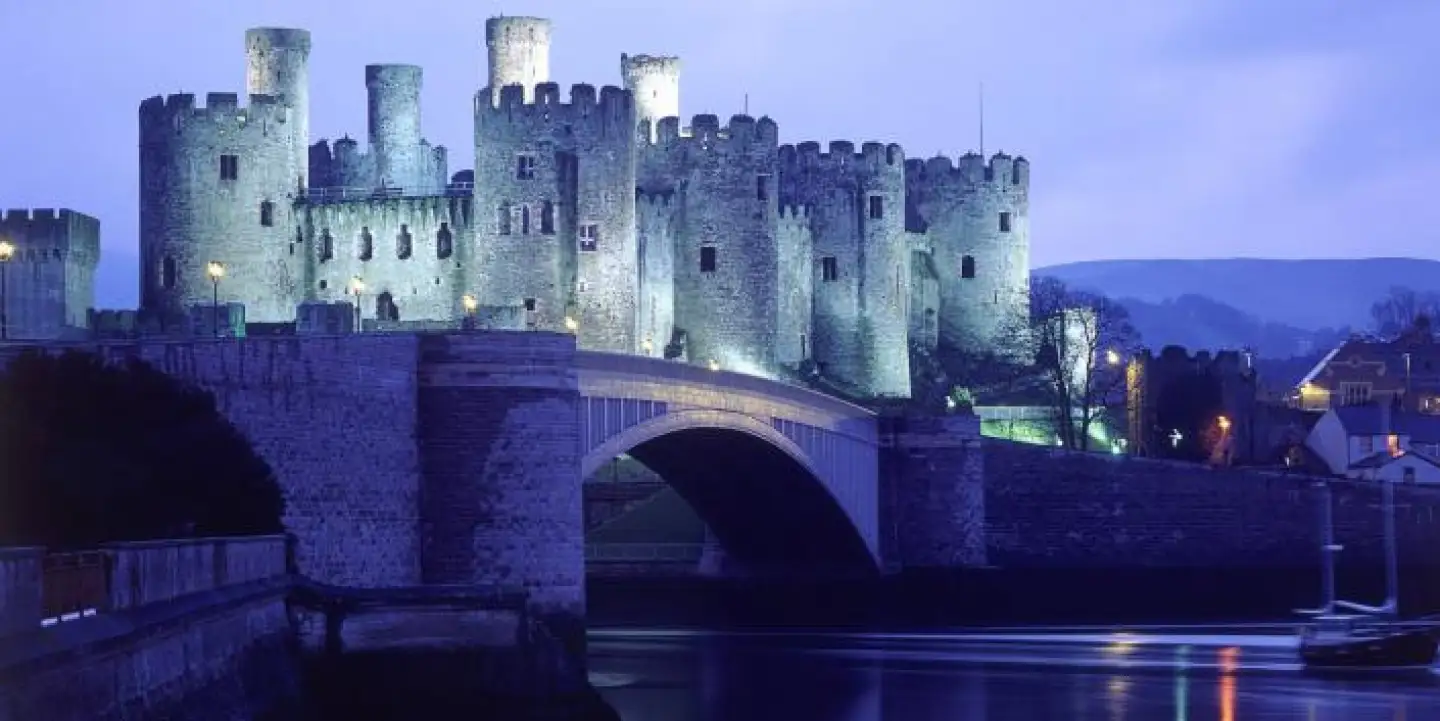
The motorway gets you from Heathrow to North Wales in an afternoon. This takes two days over it, and goes by way of the oldest stories in England.
You stand over the best preserved of the four original Magna Cartas in Salisbury's Chapter House, walk round the stones raised at Stonehenge around 2500 BC, and see the hot spring at Bath that the Romans built their baths around.
You stay the night in Bath, and by the second evening you're in Conwy, where Edward I's town walls still run unbroken round the streets.
This tour is an example: every trip is planned around the people taking it. How your tour comes together
- Duration
- 2 days
- Group size
- Up to 7 guests
- Vehicle
- Mercedes V-Class
Includes
- Expert bilingual local guide
- Travel in a Mercedes V-Class
- Daily pick-ups & drop offs
- Fully customisable
Excludes
- Food and drink
- Entry fees to attractions
- Heritage & culture
Itinerary
Day 1 Salisbury, Stonehenge and Bath
West from Heathrow to Salisbury, where the cathedral went up in one campaign between 1220 and 1258 and a century later took the tallest spire in Britain. Then Stonehenge, on the plain to the north, and the evening in Bath, where the Royal Crescent looks down over the Roman city.
-

The UK's busiest international airport, west of central London
The United Kingdom's busiest airport, west of central London, and the principal arrival point for guests flying in from overseas. Tours can begin here with a transfer on to Wales. -
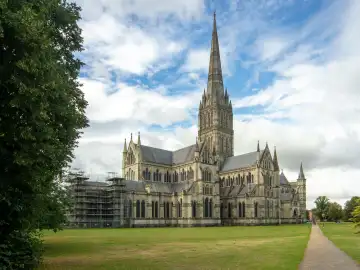
Britain's tallest spire, and the best-preserved original Magna Carta
Built in a single campaign between 1220 and 1258, which is why it is one style from end to end, with the tallest spire in Britain added in the following century. The Chapter House holds the best preserved of the four surviving original copies of Magna Carta, sealed in 1215, and the nave has a medieval clock of about 1386, one of the oldest working clocks in the world. The Close around it is the largest cathedral close in Britain. -
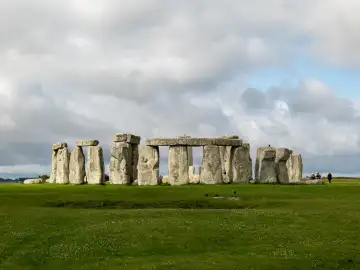
The great prehistoric stone circle of Wiltshire, raised around 2500 BC
A prehistoric monument located in Wiltshire, England, renowned for its massive stone circle, which dates back to around 2500 BC. It consists of large standing stones arranged in a circular formation, believed to have been used for ceremonial and astronomical purposes. Stonehenge is a UNESCO World Heritage Site and attracts millions of visitors each year, drawing interest for its mysterious origins and significance in ancient rituals. -
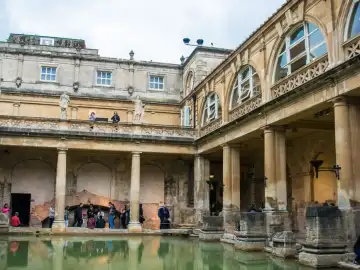
World Heritage city of Roman baths and honey-stone Georgian crescents
A historic city known for its Roman baths and Georgian architecture. It is a UNESCO World Heritage Site, famous for its well-preserved Roman baths, which were built around natural hot springs. The city features stunning Georgian buildings, including the Royal Crescent and the Circus. Bath is also renowned for its cultural attractions, such as the Bath Abbey and various museums.
Day 2 The Cotswolds to Conwy
Castle Combe first, the stone village Spielberg filmed for War Horse, then Bibury, where Arlington Row began as a 14th-century wool store. Bourton-on-the-Water's low bridges over the Windrush and Broadway Tower on the Cotswold edge, then north-west into Wales, to finish inside Conwy's medieval walls.
-
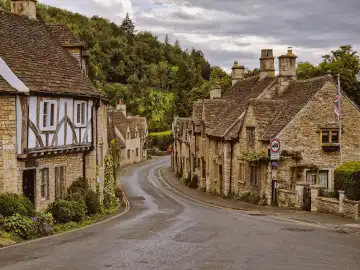
Often called England's prettiest village, and a favourite film set
A quintessentially English village often named as the 'prettiest village in England.' Castle Combe has featured regularly as a film location, most recently in The Wolf Man, Stardust and Stephen Spielberg's War Horse. It was also used in the original Dr Doolittle film. The village has a rich history and the houses are made up of the honey coloured Cotswold stone, typical for a village of this area. Within Castle Combe you'll find a Market Cross and St Andrew's Church which dates from the 13th century. -
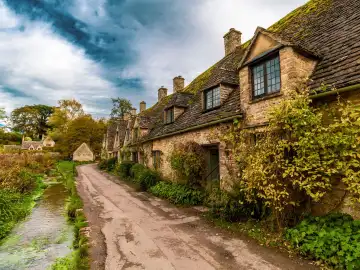
Cotswold village whose Arlington Row weavers' cottages are iconic
A charming Cotswold village famously described by William Morris in 1726 as 'the most beautiful village in England.' Arlington Row, owned by the National Trust, is one of England's most iconic and photographed sites, even appearing on the inside cover of UK passports. Originally built in the 14th century as a monastic wool store, it was converted into weavers' cottages in the 17th century. -
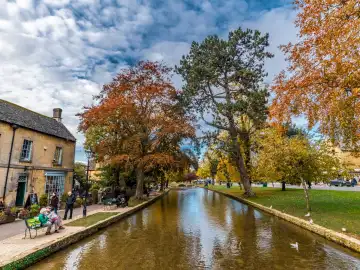
The 'Venice of the Cotswolds', bridges arching over the Windrush
Located in the Cotswolds, within the heart of England, famous for its honey-coloured stone architecture and idyllic village scenes. Known as the Venice of the Cotswolds, this one village offers a wealth of attractions and shops, restaurants, cafes and tea rooms. Or simply the space for you to enjoy some pleasurable time engrossed by the movement of the sparkling waters of the River Windrush, spanned by its five arched bridges. -
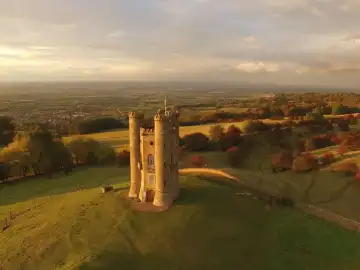
Hilltop folly with panoramic views across the Cotswold countryside
A Georgian folly crowning the second-highest point in the Cotswolds, built in 1798 to designs by James Wyatt. From the top the view is said to reach as many as sixteen counties, and the surrounding parkland makes an easy and rewarding stop. -
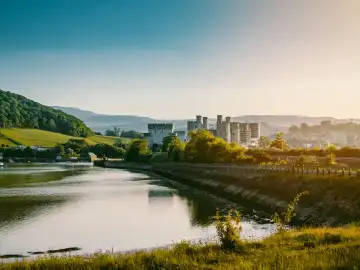
Walled medieval town with a great castle and Britain's smallest house
A walled medieval town at the mouth of the Conwy, built with the castle from 1283 and still enclosed by three-quarters of a mile of town walls with 21 towers that you can walk. Inside are Plas Mawr, the finest Elizabethan townhouse in Britain, Aberconwy House, a 14th-century merchant's house, and on the quay the smallest house in Great Britain.
Frequently asked questions
- Can we do this the other way round?
Yes. At the end of a tour it runs from your hotel in North Wales back to Heathrow, finishing at an airport hotel the night before your flight.
- Is the overnight hotel included?
No, accommodation isn't included. We'll suggest somewhere in Bath, and plan the second morning from its door.
- Can we change the itinerary?
Yes. Every tour we run is customised, so treat this itinerary as a starting point. Tell us what interests you and we will build the days around it.
- How many of us can come?
Up to 7 guests, travelling together in our Mercedes V-Class. Seven can be tight, so we usually recommend no more than 6. For a party of 8 or more, get in touch and we will make special arrangements.
- How far ahead should we get in touch?
Whenever suits you. Some guests write eight months ahead, some a few weeks before. It's best to confirm availability as soon as possible.
- Can children come?
Children are welcome. Not every tour suits every age, so tell us their ages when you get in touch and we will plan the day around them. We are not able to accommodate infants and babies.
- Can this tour be combined with other tours, or made longer or shorter?
Yes. A day tour can be built into a multi-day tour, and a multi-day tour can be shortened, extended or joined to another. Tell us how many days you have and we will plan around them.
- Are admission fees included?
No. Entry to castles, gardens and other attractions is paid on the day, where a fee applies. Most of the castles are maintained by Cadw, part of the Welsh Government. Please visit cadw.gov.wales. We can advise you on the best deals when you book your tour with us.
- Is food included?
No. As we tour we will suggest eating places that our guests have enjoyed.
- What should we wear and bring?
Sensible footwear for some light walking, and a rain jacket, just in case.
- How much walking is involved?
Some, and none of it strenuous: the walk from the car to a castle gate or a viewpoint. If walking is a concern, tell us and we will plan the stops accordingly.
