History
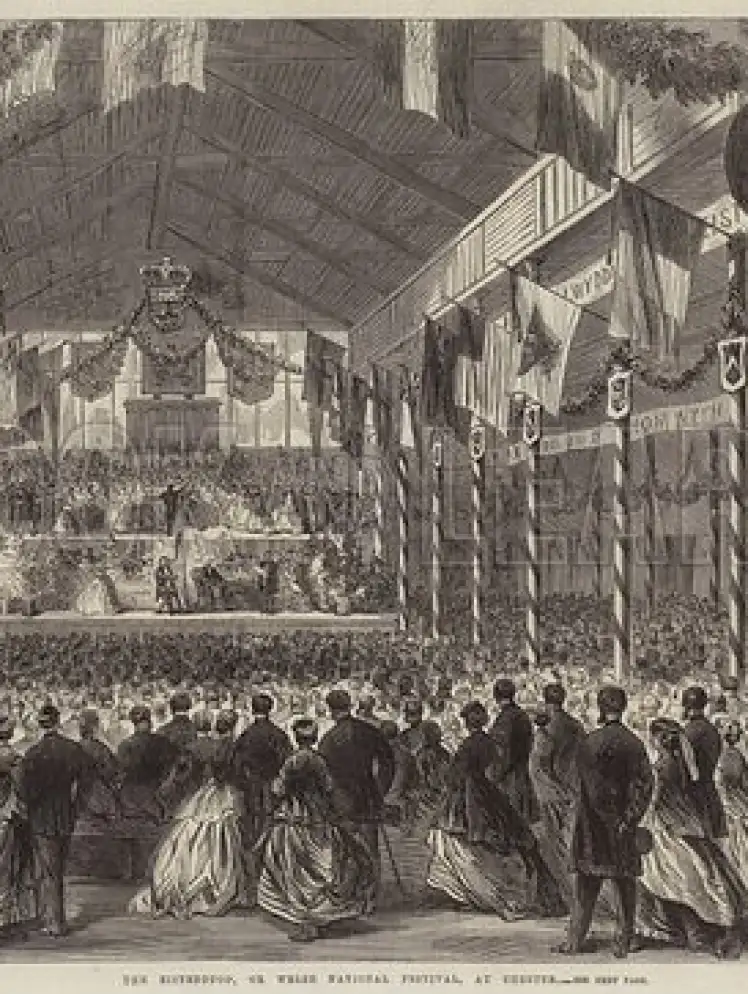
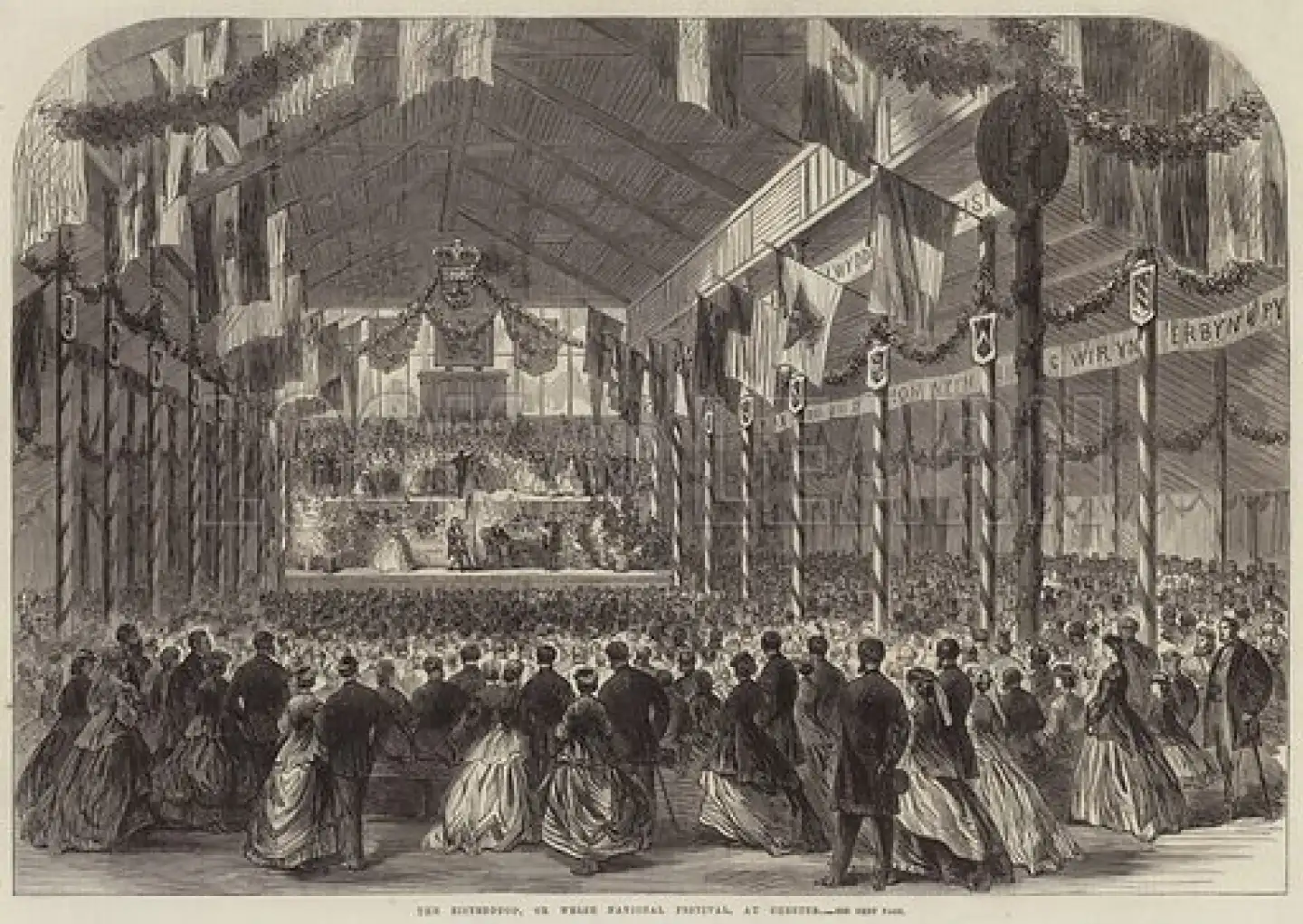
People are always asking me about the Eisteddfod, usually Americans or Canadians who've heard about it. The word is Welsh, literally "sitting" (eistedd) and "to be" (bod). It's held somewhere in Wales every August, entirely in Welsh, and it goes back to 1176.
The first was held at Cardigan Castle by Lord Rhys, one of the leading princes of his day. He brought poets and singers from all over Wales to compete, and the prize was a seat at his table. That chair has stuck with us: the top prize at every National Eisteddfod is still Y Gadair, The Chair.
The tradition revived after the 18th century, in the wake of English domination. The central figure in the revival was Iolo Morganwg: poet, stonemason and skilled forger.
Iolo invented all of the druidic ritual you see today: the robes, the stones, the sword and the role of Archdruid. He claimed the Celts had been doing it for thousands of years before him, which was a complete lie.
The Black Chair
There's a story I usually tell. In 1917 the Chair, the highest award, went to a young shepherd poet from Trawsfynydd in north Wales who wrote under the bardic name Hedd Wyn. When his name was called, no one stood up.
That's because he was dead, killed at Passchendaele just six weeks earlier.
The empty Chair was draped in black, and that year went down in history as Eisteddfod y Gadair Ddu, the Eisteddfod of the Black Chair. The Chair is now at his family's home in Trawsfynydd, and I've taken visitors there to see it.
What it is now
Today's Eisteddfod is held in the first full week of August on a big open site called Y Maes, in a different part of Wales each year, alternating between north and south. It's less a single event than a town that goes up for a week and then disappears.
More than 6,000 people compete, and over 100,000 come during the week. There are competitions in poetry, prose, theatre, choral music, solo singing, traditional singing, dance, art and crafts. Everyone is judged anonymously, and the winners are revealed at live ceremonies, which are something to see.
Since 1950 everything has been in Welsh, but you don't need any Welsh to enjoy the atmosphere, the music and the ceremonies!