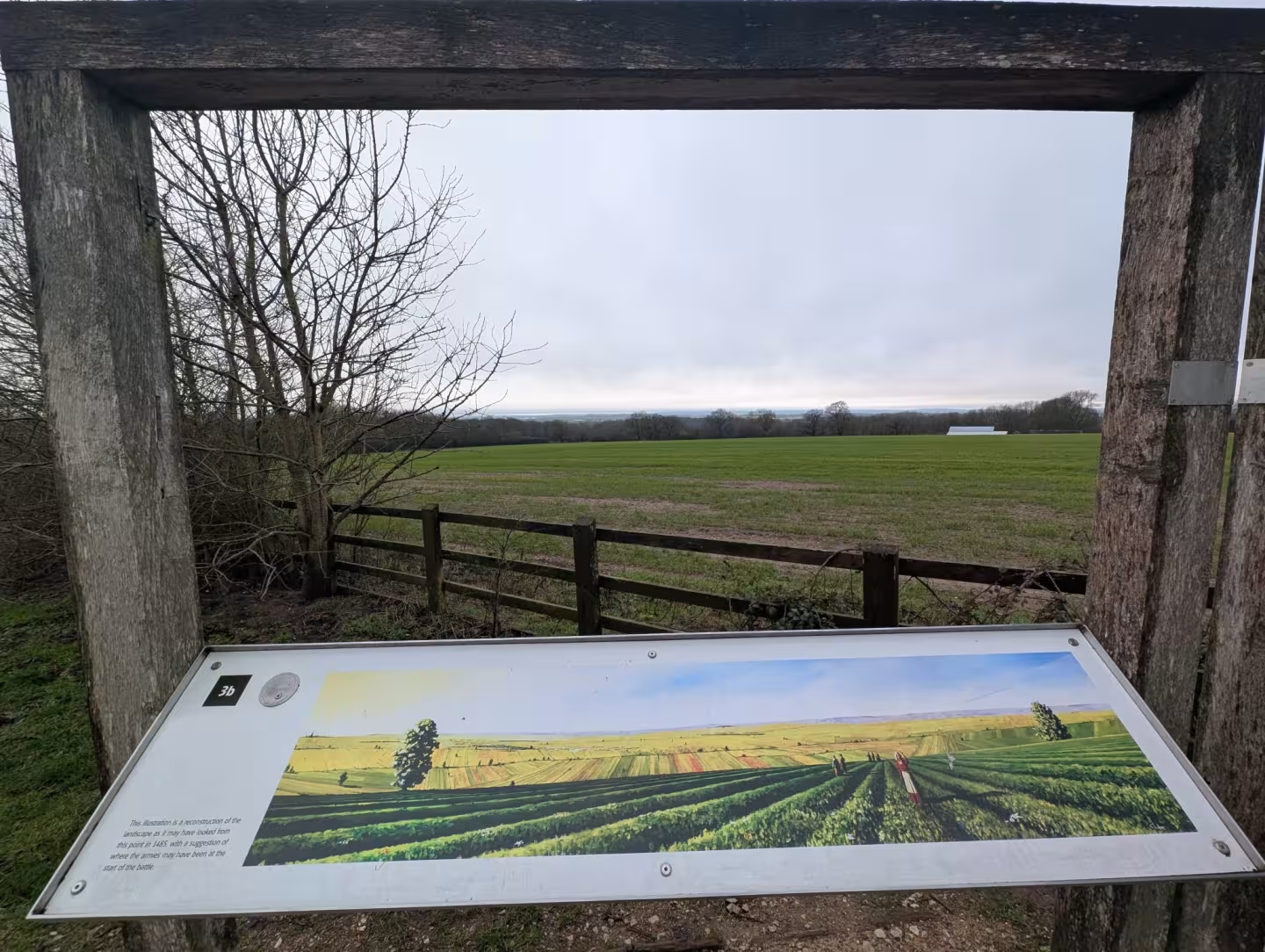
Last Sunday I visited the Bosworth Battlefield Heritage Centre. It's very moving to walk the ground where the Middle Ages ended and the Tudor period began, especially when you remember that the "English" crown was won by a Welsh army.
This is how the Welsh changed history on 22nd August 1485.
The Landing and the "Son of Prophecy"
Henry Tudor, born at Pembroke Castle, landed at Mill Bay, Pembrokeshire, on 7th August 1485. To many Welshmen he was more than a pretender to the throne. He was the Mab Darogan (the Son of Prophecy), the leader the bards had foretold, who would drive out the "Saxons" and put a British (Welsh) king back on the throne.
The 200-Mile March through Wales
Henry's plan was brilliant. Instead of heading straight for London, he marched his troops 200 miles through Wales, from Haverfordwest to Cardigan and Machynlleth, gathering support from the local lords as he went, above all Sir Rhys ap Thomas. By the time he crossed the border at Shrewsbury, his original 2,000 men had grown to more than 5,000, most of them experienced Welsh fighters.
The Turning Point at the Marsh
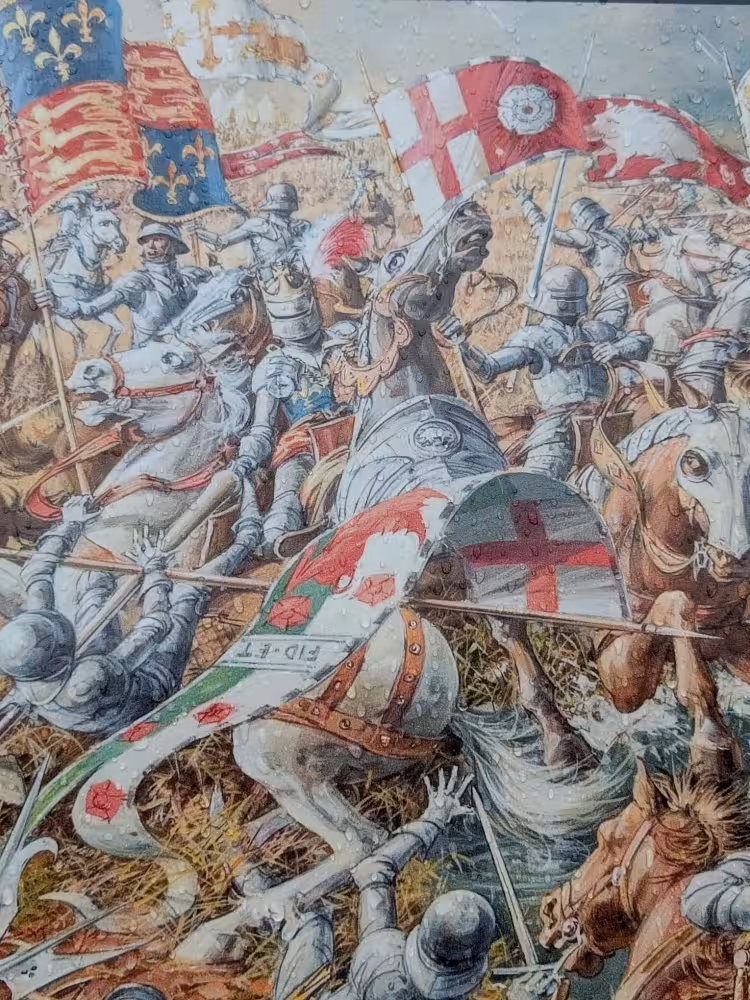
During the battle, Richard III made his famous, desperate cavalry charge to kill Henry himself.
The end of the battle was fought near a marsh at the foot of Ambion Hill. According to the chronicler Jean Molinet, a Welshman killed Richard with a halberd while his horse was stuck in the mud. Some Welsh legends say it was Rhys ap Thomas himself.
A Legacy Left on the Field
Walking through Fenn Lanes, and seeing Leicester Cathedral, where Richard III was finally buried, it's easy to remember that the Tudors, perhaps one of the best-known families in history, owed their crown to Welsh determination. The Tudors would have a complicated relationship with Wales, but Bosworth was in many ways a Welsh victory.
Visit the Site
If you decide to visit, the site is near Market Bosworth in Leicestershire.